Category Management Mastery: The Skinny on What Questions to ask …

In case you haven’t heard … Things have changed! It’s time to face the facts. Our industry and category management have been evolving for awhile (decades, actually). And, although change can be hard to overcome, attendance at our live webinars last week for both Retail and Manufacturing organizations, as well as Solutions Providers confirm that awareness of the changes ahead is growing — and concerning to both practitioners and leaders alike. Here’s why it’s time to face the facts and consider category management mastery …
Read More

Category Management Training Improves ROI on Your Data Investment

Data investments can be in the millions of dollars for organizations. ROI requires using it wisely — here’s how: If you’re like most organizations, you are purchasing more data than ever before, sometimes making decisions on what to purchase without creating necessary standards on when or how to use it to your advantage, but proudly adding it to the portfolio of data that your organization now has access to. Are you maximizing big data? Read on to discover the 4 requirements for Retailers and Suppliers / Manufacturers to maximize data investments.
Read More

Retailer Market Share as a Strategic Benchmark

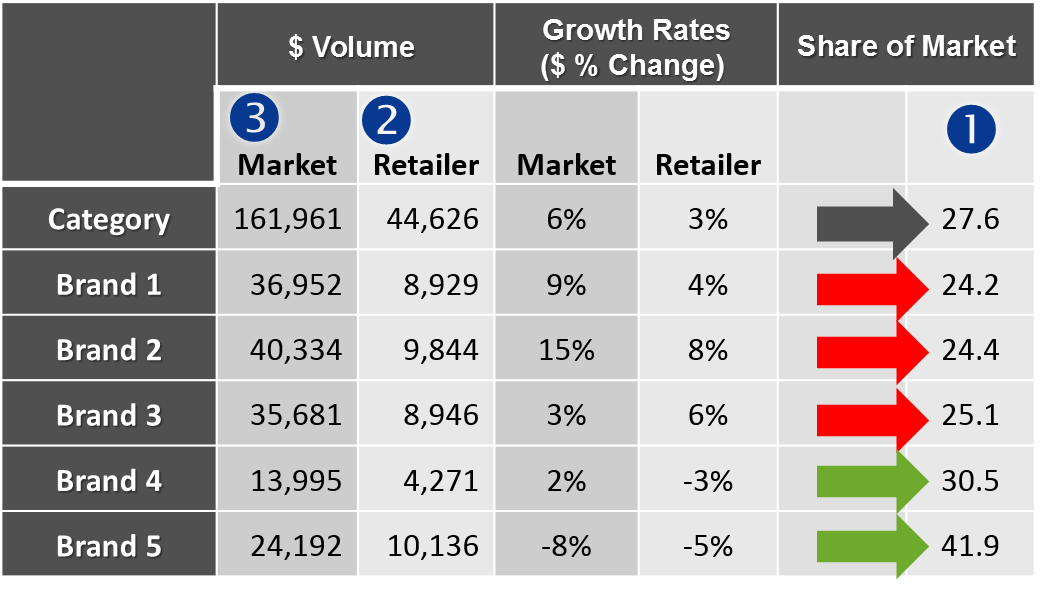
Numbers on their own don't tell the whole story. Interpreting them with strategy in mind leads to better category solutions. One of my favorite examples is retailer market share. Have you ever heard, "You're underdeveloped in this brand, so you need to fix it"? Read on.
Read More

What’s in a Best-In-Class Category Review?

Category reviews are one of the most important outputs a commercial team produces. They are built for different purposes, for retailers and for internal teams, and they usually pull data from several sources. As data gets richer and the shopper takes a bigger role, category reviews need to keep up. Often they don't.
Read More

4 Best Practices for Managing Seasonal Categories

Seasonal categories are a big source of incremental sales and profit for retailers and suppliers. "Seasonal" now covers much more than major holidays. It includes multicultural holidays, celebrations, community events and even weather-driven demand. Some seasons start much earlier than they used to, as retailers feature strong prices well ahead of the event to become the shopper's go-to store. At the same time, more sales land in the last few days before the event, and more of them happen online.
Read More

How Commercial Teams Affect a Retailer’s Income Statement

When you change an assortment, adjust shelf space, recommend a promotion or negotiate a buying deal, how often do you think about what happens to the retailer’s income statement?
Read More

Key Considerations for Strategic Pricing Analysis

A 5 or 10% change in price can move sales and profit significantly. Pricing decisions affect category sales, inventory and profitability, and they shape how shoppers see a retailer's value. And unlike assortment, space and promotion, which create value, pricing is where value gets captured. That makes it one of the most important, and most analytical, tactics in any commercial team's toolkit. Here are the key considerations I'd work through, whether you're a retailer setting prices or a supplier making pricing and promotion recommendations.
Read More
8 Ways to Move to More Advanced Analytics

Most teams I work with are great at pulling reports. The opportunity is what comes next: building strategy into your analysis, digging deeper only where it matters, and connecting your insights to action. Once you've got those habits, you're ready for more advanced analytics. Here are eight ways to get there, whether you're in category management, sales, marketing or finance, at a retailer or a supplier.
Read More

4 Steps to Uncover Strategic Business Insights

How healthy is your category or brand, really? Too often we get so caught up in the weekly numbers that we forget to step back and look at the bigger picture. And the bigger picture is a great indicator of not only what happened, but what's coming next. That's where a health assessment comes in. It looks at the outside world as well as your own results, and answers questions like: What's happening with shoppers in this category, in store and online? How is the economy affecting results? What competitive and market trends are shaping the category? Which tactics are driving results? What should we start, stop and continue? Here's the 4-step process I use. The flow works for retailers and suppliers alike. Retailers will focus on how the category performs for them versus the market. Suppliers will look at the category when working with a retailer, and at their brands for internal planning.
Read More

5 Practical Ways to Analyze POS Data

Retail POS data is one of the most useful sources of category and commercial insight — but many teams only scratch the surface. When used effectively, POS data can help you spot trends, identify in-stocks and out-of-stocks, understand sales and profit performance, track assortment and availability, and uncover shopper behavior. It is a core category-management data source with powerful applications — in this blog, I’m highlighting five of the most important ways to use it.
Read More