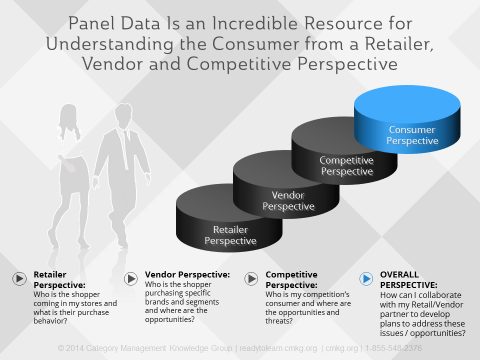
Who, How Often, How Much: Using Panel Data to Explain Sales Results

Your sales or share just moved, up or down, and everyone wants to know why. Most of us go straight to POS or key account data. That's a great start! But it only tells you what sold, not who bought it.
Read More

3 Tips: Turn Your Excel Skills From Good to Great!

Looking for some ways to improve your Excel skills to reduce errors, save time and/or take you to a new level of category management analysis? Excel is a great tool and necessary program for almost anyone in business to know how to use. But there’s always more to learn, faster ways to do things, shortcut keys, and helpful formulas. It can also waste an incredible amount of your time and be very inefficient without utilizing Excel’s powerful features through a solid understanding. If this sounds familiar, you are not alone — there are a lot of people in this camp because many of us have learned on-the-job rather than through training. The opportunity? Learn more effective Excel skills, save time and frustration and transform yourself into an Excel rockstar!
Read More

3 Ways to Address Category Management Data Gaps

Category Management on Limited Data? No problem! One of the most important requirements in category management is data. In a “perfect world” you would have access to Retail POS data, syndicated market data, consumer panel data, transactional & loyalty card data and tactical data. But in reality, many of us find shortcomings in our data – whether it’s driven by the region or industry you’re in, your budget or specific category data gaps. Limited data doesn’t limit your ability to do fact-based analysis – it just means that you have to become more resourceful in your approach to maximize sources you do have. Here are some resources to get you started in your category management approach using limited data: Infographic: How to Address Data Gaps in a Limited Data Environment Course Preview: Category Management on Limited Data Course Overview: Category Management on Limited Data
Read More

5 Ways to Improve Your Data Insights with a Category Assessment

Reading data and turning it into insights is part of almost every commercial role, for retailers and suppliers alike. A category assessment is one of the best places to build that skill. It's the first step in a category plan, and the same flow, measures and logic apply to category reviews, business reviews and internal planning documents. A good assessment helps you analyze, benchmark and interpret results, then identify strengths, weaknesses, opportunities and threats.
Read More
3 Tips For More Effective Data Insights

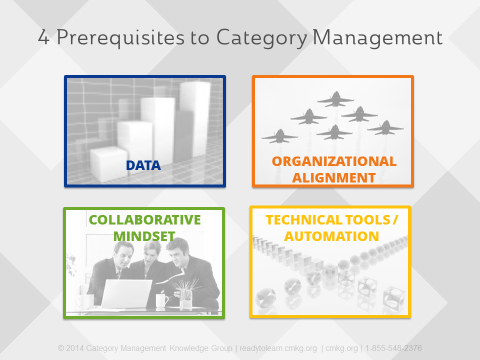
Data is one of the biggest requirements in category management for moving toward a more strategic, fact-based organization. Many organizations spend millions of dollars on data and sometimes even more money to mine the data through software and front-end reporting systems. But organizations too often forget to train their organization on some of the most important things about data. This is what can lead to misinterpretations and frustrations when using data.
Read More

Increasing Shopper Data ROI - Here’s what you need to know

Move toward increasing shopper data ROI in your organization with these 4 “must haves”. Most retailer and supplier organizations purchase shopper data — whether it's used to collaborate with your business partners, measure results vs. objectives, forecast, make fact-based decisions, find business opportunities, etc. The problems come with how to analyze category management data and then understand how to tie in action with data analysis. Data is getting more complex and even more costly. Do you know if your team is generating a return on your organization’s data investment by knowing how to turn that data into action? Here are some great resources for you to help you improve your data ROI: Training video previews with accredited content on “Category Assessment” (plus other previews) from Category Management Knowledge Group Infographic on “How to Increase ROI On Your Data Investment”
Read More

You CAN Do Category Management on Limited Data

How do you use category management analytics when you have limited data? To do good analysis, you need data. It's one of the key requirements for understanding and measuring your business strategically. And yet, despite all the new data sources available today, many of us still find ourselves in "low data" situations, whether it's across an entire industry, a region or a single category. Are you working with limited data but want to be more strategic in your approach? Here are two free resources to help: The Commercial Capability Continuum: see how far your data can take you, which stage you're at today and what it would take to move up. How to Address Data Gaps in a Limited Data Environment: practical ways to fill the gaps with the information you do have.
Read More