4 Best Practices for Managing Seasonal Categories

What are some opportunities for you to move to a more strategic approach in your seasonal categories? Seasonal merchandising represents a huge incremental sales and profit opportunity for Retailers and Manufacturers. What are seasonal categories? “Seasonal events” have evolved and expanded with changes in the Shopper, weather patterns, and new events to include everything from annual holidays, to multicultural holidays, to celebration and annual events, to special community events, and even weather-related events. Some major seasonal events are starting much earlier than in the past. Retailers who want to stand out in the marketplace now run “hot” priced features well in advance of the seasonal event to establish their stores as the best destination for the season. There is also a stronger concentration of sales during the few days before seasonal events. To realize and maximize the full potential of seasonal sales, you should apply the principles of category management to your seasonal categories. I've put together 4 best practices for managing seasonal categories that incorporate category management strategies, including a rigorous analysis post season to continuously improve your seasonal category plans.
Read More

Why Category Management is the Answer to Collaboration, Becoming Shopper-Centric, and Maximizing Big Data.

Most retail and vendor organizations I have spoken to or interacted with in the past 6 months list at least one of the following objectives in their Corporate Strategic Plans: Collaboration. There is a big opportunity for Retailer and Vendor Collaboration, but organizations are not making any or enough progress. Shopper-Centricity. To win with Shoppers, Retailers and Vendors need to collaborate to be truly Shopper-centric. Limited collaboration is leading to misalignment of messages — meaning shoppers’ needs and wants are not being met. Big Data. Leveraging Big Data (by Retailers or Vendors) requires more precision and sophistication in its use and is similarly aided by strategic collaboration between Retailers and Vendors.
Read More

Retail Promotion Planning: Choose the Right Offer for the Job

Before I plan a promotion, I ask one question.
Read More

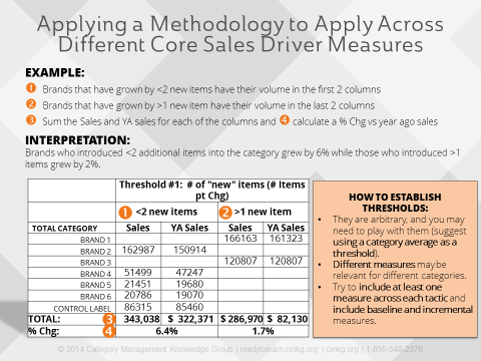
Key Considerations for Strategic Pricing Analysis

Pricing is one of the tactics of the Marketing Mix. It is an important marketing tool in retailing, and has become much more analytically- and strategically-focused than in the past. Prices vary based on different promotions, and on differing Retailer strategies. A difference of 5 or 10% in price can influence sales and profit significantly. Pricing decisions directly affect category sales, inventory positions and category profitability.
Read More

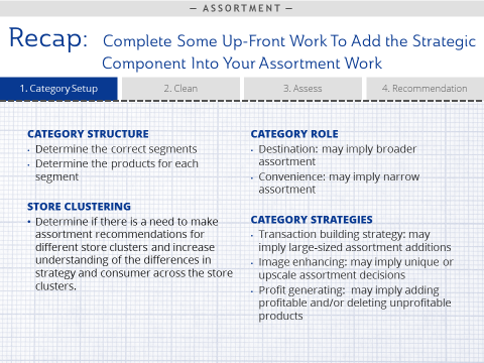
4 Ways to Inject Strategy Into Your Efficient Assortment Analysis—Beyond Item Rank Reports!

I was recently working with a large client on strategic efficient assortment and asked them what tools they used to complete their assortment analysis. Their answer? 1) “homemade” tools; and 2) item rank reports (yes, ranked in descending order and cutting off the lowest selling items). Honestly, I was shocked—how has such an important tactic (the most important one!) become so unstrategic? This approach gives little or no thought to Retailer strategy or the Retailer’s Shopper and their needs (it’s what I was doing for assortment analysis almost 25 years ago!). I think for some, assortment (and shelving, for that matter) have become too automated, too tactical and too low level. There’s so much time spent on the tactical work associated with maintaining homemade tools, managing item-level databases and pulling the right data that there’s no time left to incorporate very much strategy, Shopper or thought for trends into the recommendations. The opportunity? 1) Reduce the tactical work across your organization through proper tools and processes; and 2) Ramp up your efficient assortment analysis with a strategic Shopper focus and get a new level of insights and recommendations!
Read More

8 Ways to Move to More Advanced Category Management Analytics

Learn how to build strategic thinking into your analysis to understand more advanced Shopper solutions I’ve been writing and speaking about the components of category management which relate directly to the Category Management Association’s certification requirements, including: Steps of the category management process and the importance of Retailer strategy; Key data sources available and the different data insights to uncover; Drilling through data (including in a limited data environment) to discover strategic insights; and Assessing the health of your business.
Read More

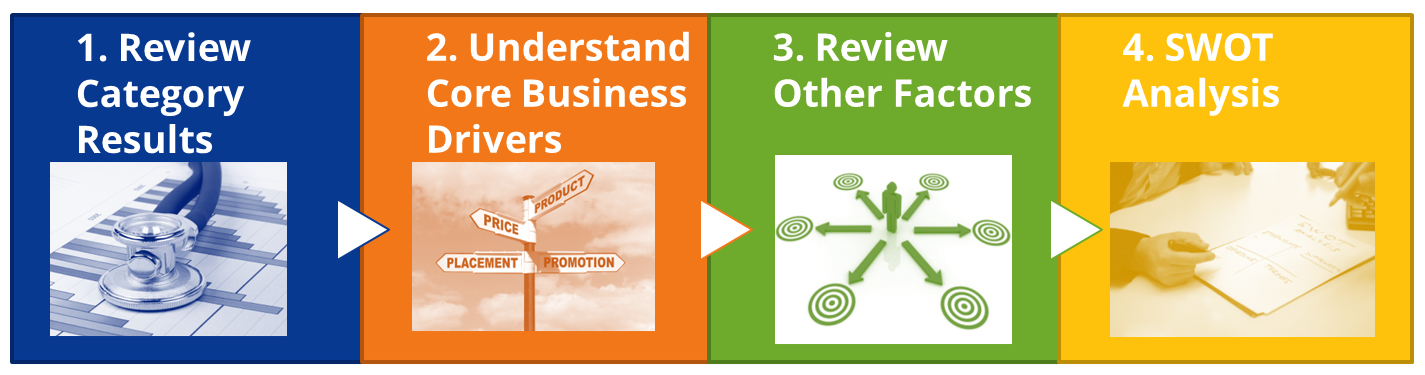
4 Steps to Uncover Strategic Business Insights and Opportunities

Learn how to assess the health of your category or brand to uncover new strategic business insights and opportunities! A category or brand health assessment looks at the external environment in addition to internal, category and segment-specific measures. It should address questions like: What is happening with the Consumer / Shopper in the category or brand? How is the economic environment impacting business results? What trends are influencing this category (competitive, market)? What tactics are driving overall category results? Which activities should Start? Stop? Continue? Too often we’re so caught up with looking at the business at a micro level that we forget to look from a bigger picture perspective – which is a great indicator of not only what’s happened in the past but gives a glimpse of the future from a bigger lens. The opportunity? Complete a category or brand health assessment. By looking at your business using multi-dimensional factors that address the questions above, you will be able to unlock strategic business insights that give new areas of opportunity and understanding for your business.
Read More

5 Practical Ways to Analyze POS Data

Retail POS data is one of the most useful sources of category and commercial insight — but many teams only scratch the surface. When used effectively, POS data can help you spot trends, identify in-stocks and out-of-stocks, understand sales and profit performance, track assortment and availability, and uncover shopper behavior. It is a core category-management data source with powerful applications — in this blog, I’m highlighting five of the most important ways to use it.
Read More

3 Tips: Turn Your Excel Skills From Good to Great!

Looking for some ways to improve your Excel skills to reduce errors, save time and/or take you to a new level of category management analysis? Excel is a great tool and necessary program for almost anyone in business to know how to use. But there’s always more to learn, faster ways to do things, shortcut keys, and helpful formulas. It can also waste an incredible amount of your time and be very inefficient without utilizing Excel’s powerful features through a solid understanding. If this sounds familiar, you are not alone — there are a lot of people in this camp because many of us have learned on-the-job rather than through training. The opportunity? Learn more effective Excel skills, save time and frustration and transform yourself into an Excel rockstar!
Read More

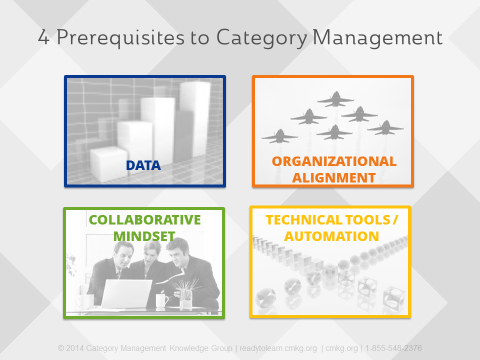
3 Ways to Address Category Management Data Gaps

Category Management on Limited Data? No problem! One of the most important requirements in category management is data. In a “perfect world” you would have access to Retail POS data, syndicated market data, consumer panel data, transactional & loyalty card data and tactical data. But in reality, many of us find shortcomings in our data – whether it’s driven by the region or industry you’re in, your budget or specific category data gaps. Limited data doesn’t limit your ability to do fact-based analysis – it just means that you have to become more resourceful in your approach to maximize sources you do have. Here are some resources to get you started in your category management approach using limited data: Infographic: How to Address Data Gaps in a Limited Data Environment Course Preview: Category Management on Limited Data Course Overview: Category Management on Limited Data
Read More