Sue Nicholls, Founder & President CMKG

Sue Nicholls is the founder and president of CMKG. Since founding the company in 2003, she has helped retailer and supplier teams connect category management and commercial knowledge to everyday business decisions. She brings a practical approach to learning, connecting concepts to real examples, company priorities, and work people actually do. Her goal is simple: help people understand the business, ask better questions, and feel more confident putting what they learn into action.

Recent Posts

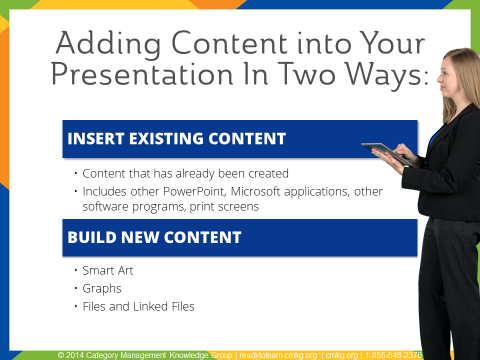
4 Ways to Give Your Category Management Presentations a Makeover

Do your presentations need a "facelift"? Start with the basics of visual communication and storytelling. Presentations have become the de facto business communication tool. Companies are started, products are launched, audiences are educated—in small or large part because of the quality of presentations. Likewise, ideas, endeavors and even careers can be cut short due to ineffective communication. Out of the millions of presentations delivered each day, only a small percentage are delivered really well. The reason for this is many of us lack visual communication skills. Most of us were never taught how to move from verbal expression to visual expression (or have ever taken a PowerPoint training course). As communicators, learning to create visual stories that connect with our audience is imperative. Turning category management data and analytics into a compelling PowerPoint presentation that engages an audience starts with the basics—you need to give equal attention to developing the visual story and to delivering the parts of the presentation!
Read More

3 Steps to Create Killer Implementation and Category Plans for Retail

Have you had some stumbling blocks creating plans that get executed at retail? So you've completed an incredible category analysis, derived compelling data insights and tied in your analysis with some tactical changes to drive action in the category. Whether these are formal category plans for retail, or tied in with a new product launch or new news about a category, your work isn't done—now it needs to be implemented. Get ready to learn how to create a category plan that kills it! How many of you have either approved a plan at your desk (as a Category Manager or Buyer) or been given approval for the plan (as a Salesperson or Category Management Analyst), but it never ends up being successfully implemented in stores? I think we all have!
Read More

3 Ways to Address Category Management Data Gaps

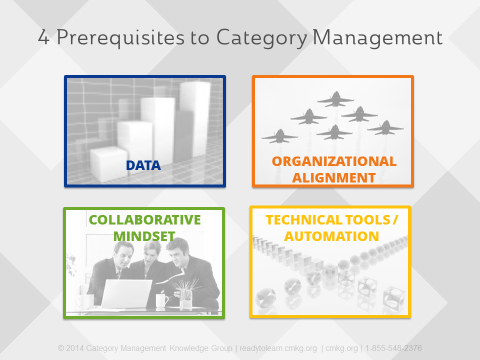
Category Management on Limited Data? No problem! One of the most important requirements in category management is data. In a “perfect world” you would have access to Retail POS data, syndicated market data, consumer panel data, transactional & loyalty card data and tactical data. But in reality, many of us find shortcomings in our data – whether it’s driven by the region or industry you’re in, your budget or specific category data gaps. Limited data doesn’t limit your ability to do fact-based analysis – it just means that you have to become more resourceful in your approach to maximize sources you do have. Here are some resources to get you started in your category management approach using limited data: Infographic: How to Address Data Gaps in a Limited Data Environment Course Preview: Category Management on Limited Data Course Overview: Category Management on Limited Data
Read More

3 Reasons to Develop Analytic Skills in Category Tactics

Strategy, Insights, Action! You understand your underlying strategies, you’ve learned how to drill down to derive insights from your data, now what? Time to create action through the category tactics, or 4 Ps, including Product, Placement, Pricing and Promotion. Begin to develop analytic skills in category tactics by understanding the big picture of Category Tactics & Analytics. Each tactic influences volume, profit and share within a brand or category, and are the key drivers of “action” in the category. They need to be monitored and analyzed in order to understand how they impact volume growth or decline within a brand or category. Both Retailers and Manufacturers (including category management, marketing, sales, retail operations, etc.) need to understand how to analyze the category tactics (the 4 Ps) to make the best fact-based decisions and recommendations for the categories they compete in.
Read More

5 Ways to Improve Your Data Insights with a Category Assessment

Being able to analyze data and derive relevant insights from it is a requirement in almost every role for both Retailers and Suppliers. There’s an opportunity for many in our industry to learn how to make fact-based, strategic decisions and recommendations by building skills to effectively read and interpret data. A great starting point for learning how to do this is through a category assessment. Creating a category assessment is also the first step in developing a retail category plan, but the flow, measures and logic apply to development of category reviews, business reviews and internal planning documents. You should be able to analyze, benchmark, interpret and identify strengths, weaknesses, opportunities and threats through an effective category assessment.
Read More

3 Tips For More Effective Data Insights

Data is one of the biggest requirements in category management for moving toward a more strategic, fact-based organization. Many organizations spend millions of dollars on data and sometimes even more money to mine the data through software and front-end reporting systems. But organizations too often forget to train their organization on some of the most important things about data. This is what can lead to misinterpretations and frustrations when using data.
Read More

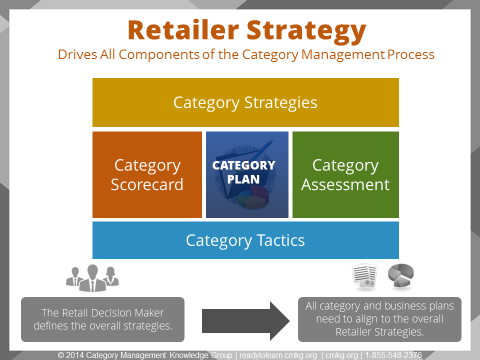
Better Category Plans Start with Clear Retail Strategy

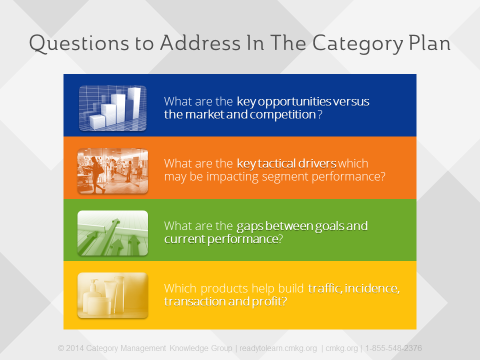
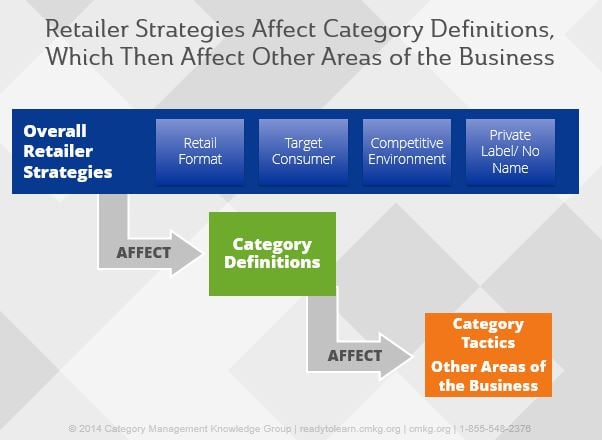
Have you ever reviewed a category plan with plenty of analysis and recommendations, but found yourself asking: “How does this connect to what the retailer is trying to achieve?”
Read More

Category Roles: Why All Categories Are Not Created Equal

Imagine managing hundreds of categories and giving every one the same amount of time, budget, space, and attention.
Read More

Category Definition: 3 Considerations For Success

Who owns Category Definition in the store anyways? Determining the best definition for categories (including their segments) is one of the core foundations in category management. In its simplest form, defining categories is about what items belong in a category based on Shopper expectations — and this responsibility belongs to the Retailer. It sounds like an easy task, but in practice, it is not because there are many considerations in this strategic component of category management. Here are some great resources from CMKG for you to get started: Category Definition & Segmentation course preview (video) Category Definition complimentary download Category Definition & Segmentation certified course details Before you define your categories, read these 3 considerations.
Read More

Why be “Retailer Centric” in your Category Management Approach?

Who really owns Category Management? When working with clients and students, I often ask them, “who owns the category management process?” About 50% respond “both Retailer and Vendor”, 30% respond “the Vendor” and 20% think it’s the Retailer. It is actually the Retailer who owns the process – Vendors play a role in the process to provide data and resources as category experts but they don’t own the process. Retailers each have their own unique approach to category management based on their internal strategies, guidelines and processes and Vendors work with them to develop strategic category plans and improve the Shopper experience. Here are some great resources from CMKG for you to get started: “Retailer Strategy” course preview (video) Category Management Continuum complimentary download "Retailer Strategy" certified course details
Read More