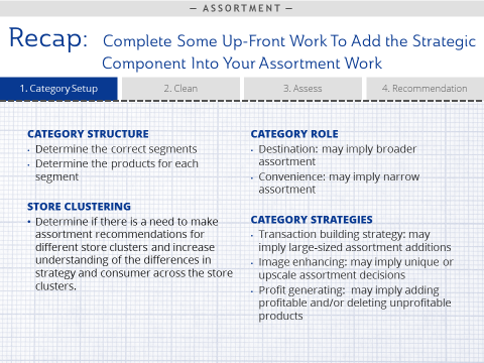
Retailer Market Share as a Strategic Benchmark

Numbers on their own don't tell the whole story. Interpreting them with strategy in mind leads to better category solutions. One of my favorite examples is retailer market share. Have you ever heard, "You're underdeveloped in this brand, so you need to fix it"? Read on.
Read More

4 Best Practices for Managing Seasonal Categories

Seasonal categories are a big source of incremental sales and profit for retailers and suppliers. "Seasonal" now covers much more than major holidays. It includes multicultural holidays, celebrations, community events and even weather-driven demand. Some seasons start much earlier than they used to, as retailers feature strong prices well ahead of the event to become the shopper's go-to store. At the same time, more sales land in the last few days before the event, and more of them happen online.
Read More

Why Category Management is the Answer to Collaboration, Becoming Shopper-Centric, and Maximizing Big Data.

Most retail and vendor organizations I have spoken to or interacted with in the past 6 months list at least one of the following objectives in their Corporate Strategic Plans: Collaboration. There is a big opportunity for Retailer and Vendor Collaboration, but organizations are not making any or enough progress. Shopper-Centricity. To win with Shoppers, Retailers and Vendors need to collaborate to be truly Shopper-centric. Limited collaboration is leading to misalignment of messages — meaning shoppers’ needs and wants are not being met. Big Data. Leveraging Big Data (by Retailers or Vendors) requires more precision and sophistication in its use and is similarly aided by strategic collaboration between Retailers and Vendors.
Read More

Retail Promotion Planning: Choose the Right Offer for the Job

Before I plan a promotion, I ask one question.
Read More

Key Considerations for Strategic Pricing Analysis

A 5 or 10% change in price can move sales and profit significantly. Pricing decisions affect category sales, inventory and profitability, and they shape how shoppers see a retailer's value. And unlike assortment, space and promotion, which create value, pricing is where value gets captured. That makes it one of the most important, and most analytical, tactics in any commercial team's toolkit. Here are the key considerations I'd work through, whether you're a retailer setting prices or a supplier making pricing and promotion recommendations.
Read More

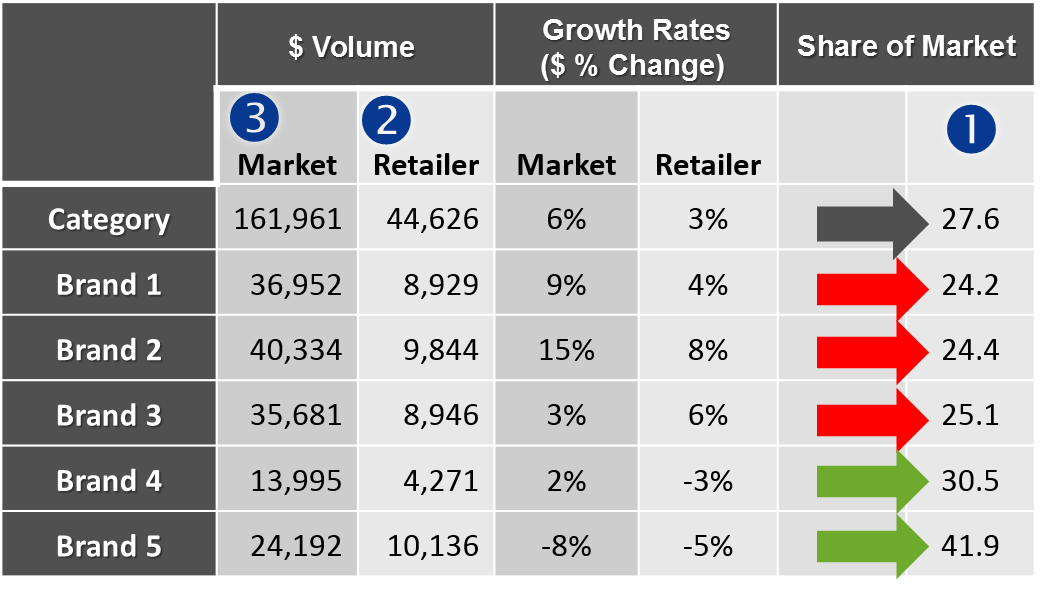
4 Ways to Put Strategy into Your Assortment Analysis, Beyond Item Rank Reports

I once asked a large client what tools they used for assortment analysis. Their answer: homemade spreadsheets and item rank reports, sorted from best to worst seller with the bottom items cut. That's how I did assortment analysis decades ago. How has one of the most important category tactics become so unstrategic? For many teams, assortment and shelving have become too automated and too tactical. So much time goes into maintaining tools, managing item databases and pulling data that there's little left for strategy, the shopper or trends.
Read More

8 Ways to Move to More Advanced Analytics

Most teams I work with are great at pulling reports. The opportunity is what comes next: building strategy into your analysis, digging deeper only where it matters, and connecting your insights to action. Once you've got those habits, you're ready for more advanced analytics. Here are eight ways to get there, whether you're in category management, sales, marketing or finance, at a retailer or a supplier.
Read More

4 Steps to Uncover Strategic Business Insights

How healthy is your category or brand, really? Too often we get so caught up in the weekly numbers that we forget to step back and look at the bigger picture. And the bigger picture is a great indicator of not only what happened, but what's coming next. That's where a health assessment comes in. It looks at the outside world as well as your own results, and answers questions like: What's happening with shoppers in this category, in store and online? How is the economy affecting results? What competitive and market trends are shaping the category? Which tactics are driving results? What should we start, stop and continue? Here's the 4-step process I use. The flow works for retailers and suppliers alike. Retailers will focus on how the category performs for them versus the market. Suppliers will look at the category when working with a retailer, and at their brands for internal planning.
Read More

5 Practical Ways to Analyze POS Data

Retail POS data is one of the most useful sources of category and commercial insight — but many teams only scratch the surface. When used effectively, POS data can help you spot trends, identify in-stocks and out-of-stocks, understand sales and profit performance, track assortment and availability, and uncover shopper behavior. It is a core category-management data source with powerful applications — in this blog, I’m highlighting five of the most important ways to use it.
Read More

3 Tips: Turn Your Excel Skills From Good to Great!

Looking for some ways to improve your Excel skills to reduce errors, save time and/or take you to a new level of category management analysis? Excel is a great tool and necessary program for almost anyone in business to know how to use. But there’s always more to learn, faster ways to do things, shortcut keys, and helpful formulas. It can also waste an incredible amount of your time and be very inefficient without utilizing Excel’s powerful features through a solid understanding. If this sounds familiar, you are not alone — there are a lot of people in this camp because many of us have learned on-the-job rather than through training. The opportunity? Learn more effective Excel skills, save time and frustration and transform yourself into an Excel rockstar!
Read More