5 Practical Ways to Analyze POS Data

Retail POS data is one of the most useful sources of category and commercial insight — but many teams only scratch the surface. When used effectively, POS data can help you spot trends, identify in-stocks and out-of-stocks, understand sales and profit performance, track assortment and availability, and uncover shopper behavior. It is a core category-management data source with powerful applications — in this blog, I’m highlighting five of the most important ways to use it.
Read More

Who, How Often, How Much: Using Panel Data to Explain Sales Results

Your sales or share just moved, up or down, and everyone wants to know why. Most of us go straight to POS or key account data. That's a great start! But it only tells you what sold, not who bought it.
Read More

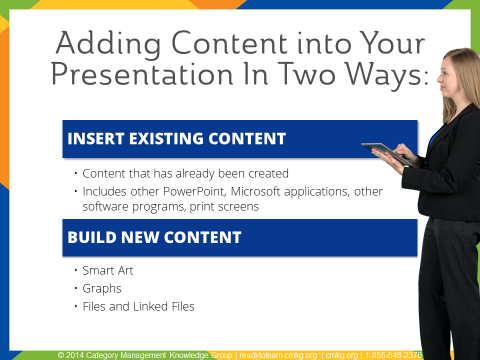
4 Ways to Give Your Category Management Presentations a Makeover

Presentations are still the main way business ideas get approved. Products launch and careers grow partly because of them. And good ideas stall because of them too. Most of us were never taught how to turn what we'd say into something people can see. Turning category data into a presentation that engages people takes equal attention to the visual story and to the delivery.
Read More

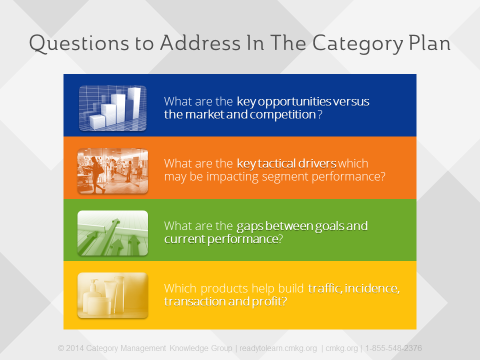
3 Steps to Category Plans That Actually Get Implemented

You've completed a great category analysis, found compelling insights and tied them to tactics that will drive the category. Whether it's a formal category plan, a new product launch or news in the category, your work isn't done. Now it needs to happen in stores and online. Have you ever approved a plan, or had yours approved, only to see it never fully make it to the shelf? Most of us have.
Read More

5 Ways to Improve Your Data Insights with a Category Assessment

Reading data and turning it into insights is part of almost every commercial role, for retailers and suppliers alike. A category assessment is one of the best places to build that skill. It's the first step in a category plan, and the same flow, measures and logic apply to category reviews, business reviews and internal planning documents. A good assessment helps you analyze, benchmark and interpret results, then identify strengths, weaknesses, opportunities and threats.
Read More
Better Category Plans Start with Clear Retail Strategy

Have you ever reviewed a category plan with plenty of analysis and recommendations, but found yourself asking: “How does this connect to what the retailer is trying to achieve?”
Read More

Category Roles: Why All Categories Are Not Created Equal

Imagine managing hundreds of categories and giving every one the same amount of time, budget, space, and attention.
Read More

Category Definition: 3 Considerations For Commercial Teams

If you asked your buying, assortment, space planning and analytics teams what belongs in a particular category, would you get the same answer?
Read More

Why Be Retailer-Centric? Retailer Strategy in Today's Category Management

Here's a question I love to ask clients and students: who owns the category management process? When I've asked, the answers usually split three ways:
Read More

Category Management Overview: Back to the Foundations

Category management is evolving. Are you? Category management was introduced in the early 1990s as part of Efficient Consumer Response, to fix problems across the whole demand and supply chain. It has kept evolving as shoppers change, data and technology get more sophisticated, digital plays a bigger role, and retailers and suppliers look for better ways to collaborate. Many organizations haven't changed their own approach to keep up. Going back to the foundations is often the best place to start.
Read More